Concrete Quality Checklist: How NJ Homeowners Can Tell If It Was Installed Right
Homeowners across New Jersey invest thousands into new patios, walkways, and driveways, expecting them to last for decades. But here’s the truth: not all concrete jobs are created equal. If you’ve noticed cracking, pooling water, or rough, flaky surfaces, you may wonder whether your concrete was installed properly. At Pete’s Concrete & Masonry, we help homeowners identify the difference between a quality installation and one that’s prone to early failure. Our team ensures every pour, finish, and cure meets professional standards so your project not only looks beautiful but also stands the test of time.
The Importance of a Concrete Quality Check
Concrete may look simple on the surface, but it’s a complex material that relies on precise ratios, timing, and technique. Poor installation can lead to structural issues, safety hazards, and expensive repairs down the line. Performing a concrete quality check early can help you catch problems before they worsen, especially in areas like North Jersey, where freeze-thaw cycles and shifting soils can accelerate damage.
Visual Clues That Indicate a Quality Concrete Job
Smooth, Even Surface
- Properly installed concrete should have a consistent, even texture, not one that is sandy, flaky, or crumbly. A strong surface feels solid underfoot, not dusty or brittle.
Minimal Cracking
Some hairline cracks are normal as concrete cures. However, large cracks (wide enough to fit a coin) or long, deep fractures can indicate mixing or curing issues. In NJ’s cold winters, improper curing can cause expansion and cracking as moisture freezes and thaws.
Correct Drainage and Leveling
- Test your slab by spraying it with a hose. Water should run off smoothly, not pool in low spots or soak in instantly. Uneven water flow could indicate poor grading or a weak subbase beneath the surface.
Clean, Well-Placed Joints
Expansion joints should be neatly cut and evenly spaced. A general rule is that joints should be placed every 8–12 feet for a 4-inch-thick slab. Poor joint placement allows random cracks to form, especially near the corners and stress points.
Quick At-Home Concrete Quality Checks
You don’t need specialized tools to assess your concrete’s integrity; just a few simple observations can tell you a lot:
- Coin or Marble Test: Place a coin or marble on the surface of the slab. If it rolls or settles in certain areas, you may have uneven leveling or dips.
- Tap Test: Lightly tap the surface with a metal handle or hammer. A hollow sound suggests internal delamination or air gaps.
- Scaling or Flaking: The top layer shouldn’t peel or chip off. Surface scaling is a warning sign of poor curing or overwatering during the pouring process.
- Honeycombing: Visible air pockets or rough cavities mean the concrete wasn’t properly compacted.
If you notice one or more of these warning signs, it’s worth scheduling a professional inspection.
Professional Concrete Testing Methods
For large slabs, driveways, or commercial structures, professionals use industry-approved testing methods to confirm concrete quality:
- Compression Testing: Small cores are extracted and tested under pressure to determine their compressive strength.
- Rebound Hammer Test (ASTM C805): A handheld device measures surface hardness and uniformity.
- Ultrasonic Pulse Velocity (UPV): Sound waves are used to assess the density and internal consistency of concrete.
- Moisture Testing (ASTM F2170): This test is especially important for indoor slabs, as it determines whether moisture levels are safe for flooring installation.
At Pete’s Concrete & Masonry, we follow these same standards to ensure every pour meets or exceeds expectations.
Common Signs of a Poor Concrete Job
When in doubt, these red flags almost always mean trouble:
- Large cracks are forming within weeks of installation.
- Pitting or sandy surfaces that crumble when brushed.
- Water pooling near joints or corners.
- Uneven color, patchy curing, or exposed aggregate in random spots.
- Concrete that “dusts” when swept or walked on.
If you’re seeing these signs, it’s possible that your concrete wasn’t mixed, poured, or cured correctly.
What Causes Poor Concrete Installation?
- Improper Water-to-Cement Ratio: Too much water weakens the mix and causes surface scaling.
- Inadequate Compaction: Trapped air pockets create honeycombing and voids.
- Rushed Curing: Concrete must stay moist long enough to develop strength, especially during NJ’s dry summers or cold winters.
- Ignoring Weather Conditions: Pouring concrete during extreme heat, cold, or rain without adequate protection can lead to premature failure.
When to Call a Professional
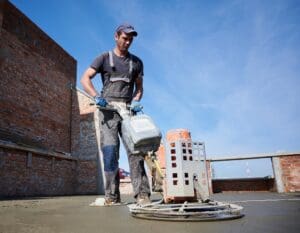
If your concrete is showing signs of distress, don’t ignore it. Small issues can quickly worsen, leading to structural instability or costly replacements. Pete’s Concrete & Masonry provides expert inspections, repairs, and replacements throughout New Jersey. Pete and his team take the time to thoroughly assess each situation, explain your options, and restore your concrete’s strength and appearance.
Whether you need help with a new patio, driveway, or walkway, our goal is to ensure your concrete is installed correctly, the first time.
Call Pete’s Concrete & Masonry today at 201-674-1827 or visit our website to schedule a professional concrete assessment.