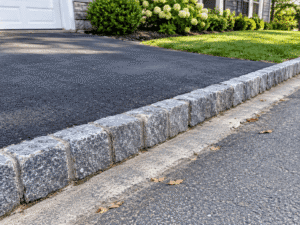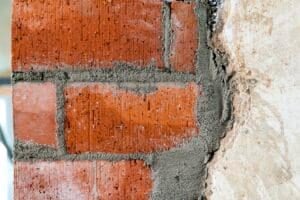
Ask around before building a patio and someone will tell you pavers don’t crack, so pavers always win. It’s half right. A paver patio won’t crack like a slab can, but it can settle, shift and heave. And a poured concrete patio that’s built properly can go through winter after winter without much trouble. For North Jersey homeowners choosing between the two, the material matters less than most people think. What’s under it matters more. Pete’s Concrete & Masonry builds both kinds of patio.
Neither pavers nor poured concrete is better everywhere. Pavers are the better choice when you want design flexibility, easier spot repairs, and a surface that moves with the ground instead of cracking. Concrete is the better choice for a simple, flat, well-drained space where you want one continuous surface with no joints to maintain. In a freeze-thaw climate like North Jersey’s, both last only as long as the base and drainage underneath them.
How Each Patio Is Actually Built
The difference starts with how each one goes in. Here’s how Pete’s Concrete & Masonry builds them.
A Poured Concrete Patio
The area is excavated or the old concrete is broken out, lines are run, and forms are set. A base of 3/4 inch quarry process stone (crushed stone mixed with stone dust, which packs down hard) goes down and is compacted. Wire or rebar is run through the formed area where the job calls for it. Patios are typically a 4 inch pour. Once the concrete is poured, expansion joints are installed, and walks and patios get a broom finish for grip. Thickness and grade follow the town’s or municipality’s code.
The result is one rigid slab. Its strength comes from being a single piece, and so does its main weakness: when the ground under it moves, a slab can’t flex, so it cracks.
A Paver Patio
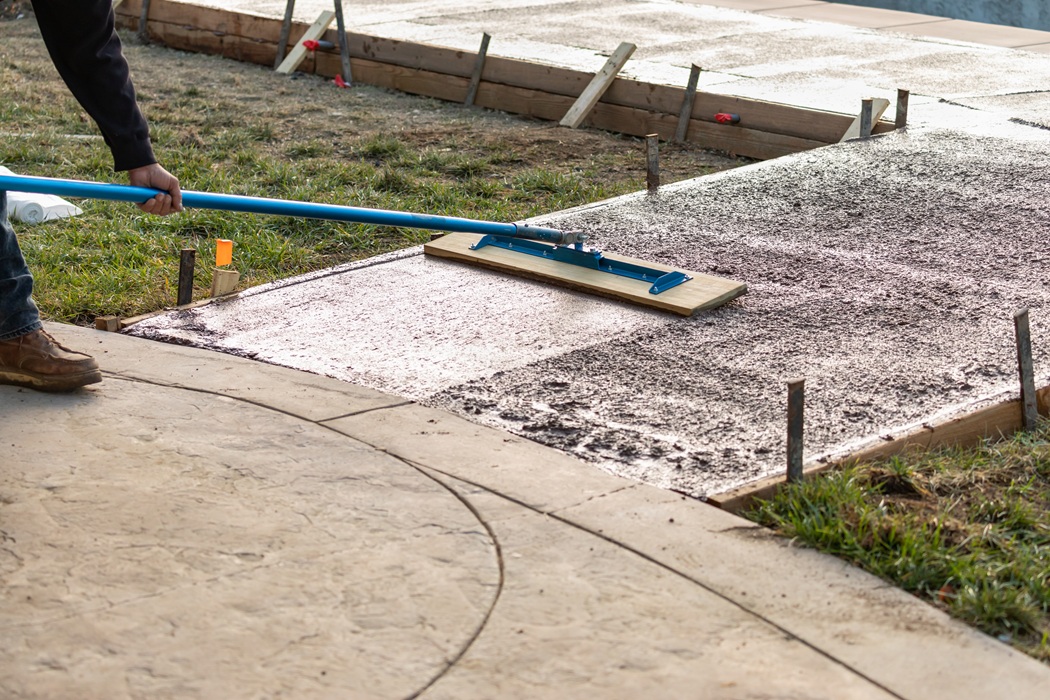
The area is excavated and the debris is removed. A base of 3/4 inch quarry process stone is placed and compacted. On top of that goes 1 inch of stone dust, screeded (leveled flat with a straight edge), which is the bed the pavers sit in. Lines are run, the pavers are set, cuts are made and border stones go in. A subgrade edge restraint, a border set just below the surface, is installed to stop the pavers spreading, and the pavers are compacted down into the stone dust. After the surface is power washed and dry, polymeric sand is swept into the joints.
The result is hundreds of separate units locked together by the edge restraint and the sand in the joints. It can move a little without breaking, but only if the edges hold and the base stays put.
Haskell, NJ
Not sure which patio suits your yard?
Pete builds both paver and concrete patios, and he gives every estimate himself, free.
What a North Jersey Winter Does to Each
Freeze-thaw cycling is the main thing that wears out patios here. Water gets into the ground and into small openings in the surface, freezes, expands, and thaws again, many times each winter. You can read more about how freeze-thaw cycles damage masonry and concrete, covered in a separate guide on this site.
On a concrete patio, the risk is cracking. If water collects under the slab and freezes, the ground can heave and lift part of it. Surface water that soaks in and freezes can also flake the top layer. Expansion joints give the slab somewhere controlled to move, and a well-compacted, well-drained base keeps water from pooling under it in the first place.
On a paver patio, the risk is movement rather than cracking. Frost heave can push individual pavers out of level. Joint sand that washes out lets water down into the bed. And if the edge restraint fails, the pavers along the border start to spread. None of that is a crack, but a patio with a heaved corner and a sunken middle is still a problem.
The common thread is water and the base. Neither material fixes a patio built on poorly compacted fill or graded toward the house.
What Fixing Each One Looks Like
A cracked concrete patio can’t be repaired invisibly. Hairline cracks can be sealed to keep water out, but a patch or a replaced section will look different from the rest of the slab. If the base has failed, the fix often means breaking out and re-pouring that area.
A paver patio can be taken apart and put back. A cracked or stained paver can be lifted out and replaced. A settled area can be opened up, the base leveled and re-compacted, and the same pavers relaid. The repair is usually hard to spot afterward, provided matching pavers are still available, which is worth keeping a few spares for.
Upkeep Over the Years
Concrete needs less routine attention. Keep it clean, watch for cracks, and seal it periodically if you want added protection against water and de-icing salt. Salt is hard on concrete surfaces, so go easy on it.
Pavers need their joints looked after. Polymeric sand holds up well, but over time some washes out or breaks down, and weeds or ants can find their way into gaps. Adding or replacing joint sand every so often keeps the pavers locked together and the water out.
Looks, and Where Stamped Concrete Fits
Pavers win on design. They come in many shapes, colors and textures, and can be laid in patterns, borders and curves. Plain concrete gives you a clean, uniform surface, usually with a broom finish for traction.
Stamped concrete sits in between. It’s poured as a slab and then textured and colored to look like stone or brick, so it gets some of the look of pavers while keeping the behavior of a slab. That includes the same tendency to crack, and a crack is harder to hide in a pattern.
What Drives the Cost Difference
Paver patios usually cost more to install than a plain poured concrete patio of the same size. It comes down to how they’re built:
- Labor. Every paver is set by hand, and cuts along edges, steps and curves add time. A concrete slab is formed, poured and finished in far fewer steps.
- Materials and layers. A paver patio needs its base, a stone dust bed, edge restraint and joint sand on top of the pavers themselves.
- Design. Patterns, borders and multiple colors add cutting and layout time.
- Site conditions. On either patio, excavation, removal of an old slab, slopes, drainage work and access for equipment all change the price.
The only way to know what your patio would cost is an estimate based on your yard.
Weighing pavers against concrete for a patio this season? Call Pete directly to talk it through.
When Concrete Is the Better Choice
- You want a simple rectangle and the most patio for the budget.
- The yard is flat and drains well, so the slab won’t sit in water.
- You’d rather not deal with joints, weeds or re-sanding.
When Pavers Are the Better Choice
- You want curves, borders, patterns or colors.
- The ground tends to move, and you’d rather have a surface that shifts slightly than one that cracks.
- You want repairs that disappear, such as lifting a few pavers to reset a low spot.
- The patio connects to steps, a walkway or a pool area where a custom layout matters.
Either way, ask how the base will be built. The depth and compaction of the base, how the patio is pitched to shed water, and how the edges are held matter more than the name of the material on the estimate. If you’re weighing a patio for your own yard, you can see how Pete’s builds paver and concrete patios in Haskell and nearby towns.
How Long Patio Installation Takes
Most patio projects take about 3 to 7 days, depending on the size of the job and the weather. A concrete patio also needs time to cure before it takes full use. Timing matters more than people expect: see the best time of year to pour concrete in NJ for how temperature and rain affect a pour. Some towns also require approval for patio work, so check whether your patio needs a permit before work is scheduled.
Frequently Asked Questions
Are pavers better than concrete for a patio?
Not always. Pavers suit custom designs and easy spot repairs; concrete suits a simple, flat, well-drained patio with no joints to maintain.
Do pavers crack in winter?
Individual pavers rarely crack from frost, but the patio can still heave, settle or spread if water gets into a weak base or the edges fail.
Can you put pavers over an existing concrete patio?
Sometimes. It depends on the condition of the slab, whether it’s cracked or heaved, how it drains, and the height it adds at doors and steps. A slab that has already moved is usually better removed than covered.
Planning a Patio
The right choice depends on the yard itself: how it drains, how much it slopes, and what the patio needs to carry. Pete’s Concrete & Masonry builds both paver and concrete patios, and Pete gives every estimate himself.