
Can Masonry Work Be Done in Winter? A North Jersey Homeowner’s Guide
If you’re a North Jersey homeowner hoping to install a stone wall, repair masonry, add stone veneer, or complete another outdoor project before spring, winter weather can make the decision tricky. You may be worried that freezing temperatures will weaken the mortar, delay the job, or leave you paying to repair failed masonry a year later. Pete’s Concrete & Masonry helps homeowners navigate those conditions by adjusting installation methods to the weather rather than treating a January job like one completed in May.
Can Masonry Be Installed in Cold Weather?
Yes. Masonry can be installed during winter, but special cold-weather procedures become necessary once temperatures fall below about 40°F (4.4°C). According to the Concrete Masonry & Hardscapes Association, masonry work can continue below 40°F when appropriate construction and protection procedures are followed. Normal masonry conditions are generally considered to be between 40°F and 90°F.
The bigger issue isn’t that brick or stone suddenly becomes unusable in January. It’s the mortar and the water inside it. Mortar gains strength through hydration. Cold temperatures slow that process considerably, and allowing fresh mortar to freeze before it develops adequate strength can compromise the bond. That makes winter masonry possible, but much less forgiving.
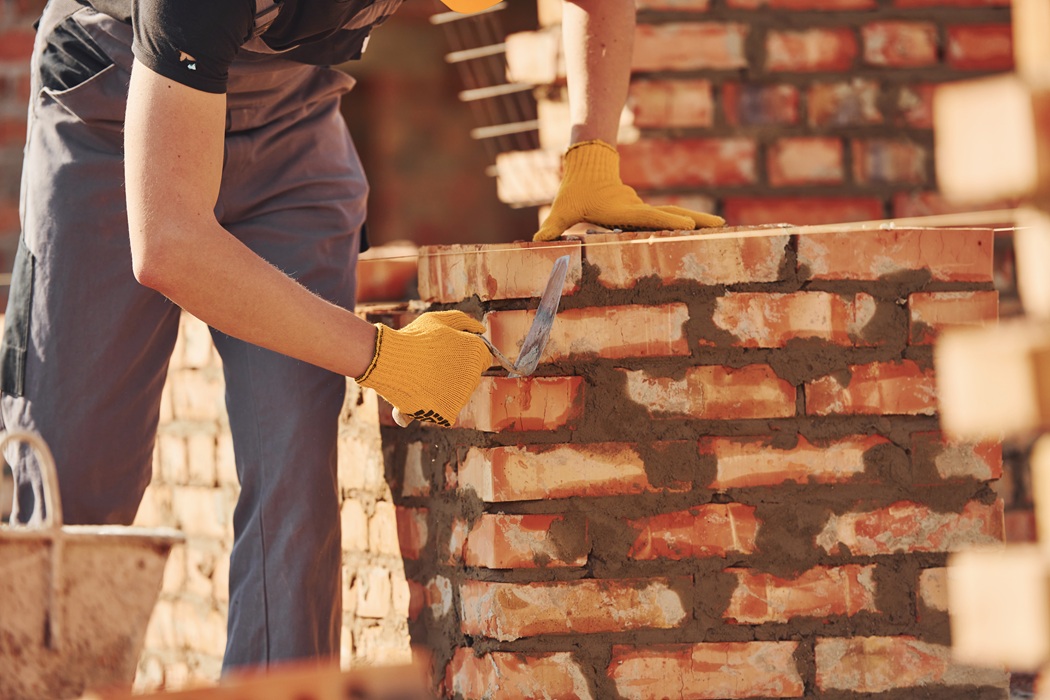
What Temperature Is Too Cold for Masonry?
The important number to remember is 40°F. Below this temperature, contractors need to begin using cold-weather procedures. As temperatures fall further, those precautions become increasingly demanding. The International Masonry Institute notes that contractors may need to heat water or aggregates to keep freshly mixed mortar within the proper temperature range.
When conditions become extremely cold, heated enclosures may also be necessary. A professional winter installation may therefore involve:
- Heating mixing water or sand
- Keeping masonry units dry and off frozen ground
- Removing all snow and ice before installation
- Erecting windbreaks or temporary enclosures
- Using safe temporary heat
- Covering completed masonry with insulated blankets or weather-resistant protection
What you don’t want is someone simply mixing mortar outside on a freezing morning and hoping for the best.
Why North Jersey Winters Make Masonry More Complicated
- Cold alone isn’t the only challenge around Haskell, Wayne, Ringwood, Wanaque, Pompton Lakes, and surrounding North Jersey communities. It’s the temperature swings. A wall might experience sunshine and temperatures above freezing during the afternoon, followed by freezing conditions overnight.
Moisture inside porous brick, mortar, concrete, or stone can freeze and expand, contributing to deterioration over repeated freeze-thaw cycles. Pete’s has covered this problem in more detail in its guide to freeze-thaw masonry damage in New Jersey. Winter masonry therefore requires attention to both installation temperature and the weather expected after the crew leaves.
Can Stone Masonry and Stone Veneer Be Installed in Winter?
- Yes, but exterior stonework deserves particularly careful temperature control. Stone veneer depends heavily on a strong bond among the stone, the setting mortar, and the prepared substrate. Cold-weather guidance for manufactured stone veneer calls for protection when temperatures are at or below 40°F before, during, and after installation.
For exterior veneer, temperature swings and moisture exposure make shortcuts especially risky. Industry guidance recommends cold-weather provisions for adhered veneer installations when ambient temperatures are below 40°F.
- Picture a homeowner installing a beautiful stone façade during an unusually mild January afternoon. It looks perfect when the crew leaves. That evening, temperatures tumble into the 20s before the mortar has gained sufficient strength. The problem may not appear the next morning. Poor bonding can reveal itself later as loose stones, cracked joints, or sections that eventually require replacement.
For anyone considering natural stone, retaining walls, steps, or other custom work, Pete’s masonry contractor services can help determine whether to proceed immediately or wait for a better weather window.
How Do Professionals Protect Masonry During Winter?
1. Check Both Current and Forecast Temperatures
The daytime high isn’t enough. Contractors must consider overnight lows and the temperatures expected while the new masonry is curing.
2. Keep Materials Dry
Brick, block, and stone should be stored away from snow, ice, and frozen ground. Masonry units with visible ice or snow should not simply be installed as-is.
3. Control Mortar Temperature
Cold-weather procedures may include heating water or aggregates to keep mortar at approximately 40°F to 120°F when mixed.
4. Protect Fresh Work
Depending on conditions, crews may use insulating blankets, tarps, wind protection, or heated enclosures to prevent premature freezing.
5. Know When to Postpone
Sometimes the smartest masonry technique is waiting. If a severe cold snap, snowstorm, or rapidly changing weather makes adequate protection impractical, delaying the work can protect the homeowner’s investment.
How Long Does Masonry Take to Cure in Winter?
- There isn’t one curing time that applies to every masonry project. Mortar begins gaining strength after placement, but cold conditions slow that development. Winter work, therefore, requires longer and more careful protection than masonry installed in moderate temperatures.
For some veneer installations, industry guidance calls for protection before, during, and for 48 hours after masonry work when temperatures are at or below 40°F. Other projects may require different protection periods depending on temperature, mortar, wall type, and specifications. That’s why simply asking, “Will it be above freezing while you’re working?” doesn’t tell the whole story. Ask what happens that night and the following day, too.
Should You Schedule Your Masonry Project This Winter?
- Winter does not automatically mean putting every masonry project on hold until April. Repairs, stone masonry, walls, veneer, and other work can often move forward when conditions are manageable and proper precautions are available. The decision should be based on the project, materials, forecast, and ability to protect fresh mortar, not the calendar alone.
Pete’s Concrete & Masonry is based in Haskell and has decades of hands-on experience with concrete, masonry, and custom stonework throughout North Jersey. Pete is directly involved with the work: according to the company, the owner answers the call, provides the estimate, supervises the project, and completes one job at a time.
- If you’re considering stonework, masonry repairs, a retaining wall, steps, or another winter project, call Pete’s Concrete & Masonry at 201-674-1827. The team can evaluate the project and current weather conditions and tell you whether it makes sense to start now, or wait for a safer installation window.